
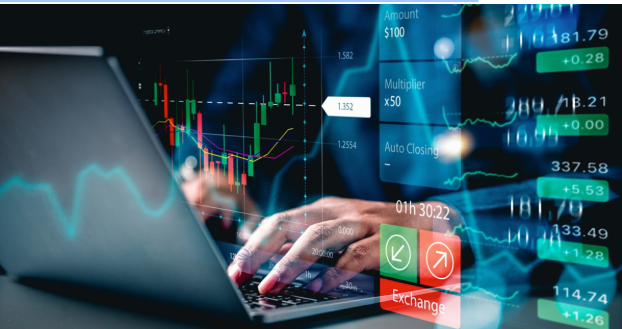

Scalping and high-frequency day trading demand an entirely different operational environment than long-term swing trading. When your strategy relies on capturing tiny price movements over seconds or minutes, minor execution delays or wide transaction costs can immediately turn a winning system into a losing one. Finding a trading environment engineered specifically for rapid order execution and low latency is critical to protecting your edge.
What makes scalping and high-frequency trading so sensitive to broker execution?
High-frequency traders and scalpers operate on paper-thin margins, often aiming for just a few pips of profit per trade across dozens of daily setups. In this fast-paced environment, every millisecond counts.
If your order suffers execution lag, you end up with slippage—getting filled at a worse price than the one you clicked on your chart. Slippage acts like a hidden tax on every single trade. Imagine buying a cup of coffee listed for two dollars, only to have the cashier charge you two-fifteen because of a delay in processing your order. Doing that fifty times a day will quickly ruin your daily balance. To ensure your rapid-fire entries fill instantly with minimal friction, finding platforms among low spread forex brokers that feature direct interbank execution routing is paramount.
Why are raw ECN/STP account models better for scalping than standard fixed-spread accounts?
Standard market maker accounts bundle broker fees into widened, fixed spreads. While that setup works fine for casual swing traders, it is disastrous for scalpers who need clear entries inside tight market ranges.
Raw Electronic Communication Network (ECN) or Straight-Through Processing (STP) accounts pass institutional market liquidity directly to your platform. Instead of paying a marked-up spread, you get raw spreads—often near 0.0 pips on major currency pairs—in exchange for a small, transparent commission fee per lot traded. This structure keeps your entry baseline clean and predictable. Before opening a fast-execution account, mastering fundamental market concepts through how to start forex trading for beginners guarantees that you understand how raw spreads and order book depth influence trade performance.
How does platform infrastructure and server latency affect high-frequency setups?
Your trading software is your main engine, and latency measures how fast your execution requests travel from your laptop to the broker’s server bank. High latency introduces freezing order buttons, rejected requests, and severe re-quotes during active sessions.
Look for providers that host their trade execution servers in major financial data centers, such as Equinix facilities in London or New York. Many high-frequency traders use Virtual Private Servers (VPS) located in the exact same data centers as their broker’s servers. This ultra-close proximity reduces latency down to single-digit milliseconds. Pair this hardware setup with advanced platform features—like one-click execution, customizable keyboard shortcuts, and automated order routing—to execute rapid trades without visual friction or software lag.
What order execution policies and trading restrictions should scalpers watch out for?
Believe it or not, some brokers actively discourage or restrict rapid scalping inside their terms of service. They might enforce minimum trade duration rules, requiring positions to remain open for at least two to five minutes before closing.
If you attempt to close a trade within thirty seconds on such accounts, the broker might cancel your profits or flag your profile for policy violations. You must verify that your broker explicitly permits all short-term trading styles, including automated Expert Advisors (EAs) and tick-scalping strategies. Additionally, ensure the broker guarantees no dealing-desk intervention, meaning a human dealer never manual-approves or delays your live orders.
How do leverage and margin requirements impact rapid day-trading strategies?
High-frequency trading often uses elevated leverage to amplify modest pip gains across high order volumes. Leverage functions like a financial amplifier; it boosts your exposure relative to your posted margin, magnification both potential gains and drawdowns.
While leverage allows you to take larger position sizes with less initial capital, high-frequency traders must manage margin calls carefully. Understanding the balance between position sizing, margin maintenance, and downside risk via what is leverage trading is vital for keeping your trading capital safe. Ensure your broker offers negative balance protection so an unexpected flash crash never forces your balance into negative territory.
Summary
Prioritize raw ECN execution models, ultra-low latency server locations, and zero trading restrictions over promotional account bonuses when selecting a broker for scalping. Always test a broker’s execution speed on a live demo or small micro-account during volatile session overlaps first. Keeping your transaction execution fast, transparent, and cheap is the true secret to scaling short-term day trading strategies safely.