
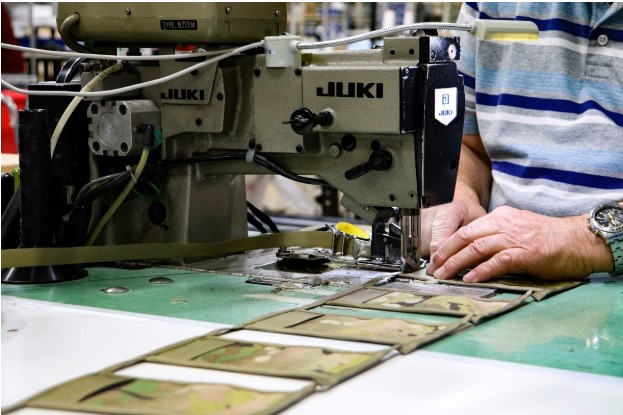

Military textile manufacturing plays a critical role in ensuring that armed forces worldwide are equipped with reliable, durable, and functional gear. Among the many factors that contribute to the quality and effectiveness of military textiles, heavy duty sewing stands out as a fundamental element. The complex demands placed on military clothing, gear, and equipment require sewing techniques that go beyond conventional stitching. This article explores the importance of heavy duty military sewing in producing textiles that meet rigorous military standards and support operational success.
Understanding Heavy Duty Military Sewing
Heavy duty military sewing refers to specialized sewing methods and technologies designed to join high-performance fabrics and materials used in military applications. Unlike standard sewing, which is adequate for everyday garments, heavy duty sewing focuses on durability, strength, and resistance to extreme conditions. Military textiles often incorporate materials like ballistic nylon, Kevlar, Cordura, and other advanced synthetics that demand reinforced seams and robust thread to withstand mechanical stress, abrasion, and exposure to harsh environments.
This type of sewing involves the use of heavy gauge threads, industrial sewing machines capable of penetrating thick and layered materials, and techniques such as double-stitching, bartacking, and bar tacking. These methods ensure that seams do not unravel or weaken during combat situations, training exercises, or extended deployments. The precision and expertise required in heavy duty military sewing make it a highly specialized craft within textile manufacturing.
Importance of Heavy Duty Sewing in Military Gear Durability
Military gear—including uniforms, backpacks, tactical vests, parachutes, and vehicle covers—must endure substantial wear and tear without compromising functionality. The role of heavy duty sewing in this context cannot be overstated. Seams are often the weakest points in a textile product; thus, superior sewing techniques are vital to prevent failure.
In battlefield conditions, equipment is subjected to constant friction, weight stress, and environmental exposure such as moisture, heat, and dirt. Heavy duty military sewing ensures that seams maintain their integrity under these pressures. For instance, a torn seam in a soldier’s protective vest or backpack could mean the difference between safety and vulnerability. Furthermore, the sewing must allow some flexibility and comfort without sacrificing strength, balancing rigidity with ergonomics.
Manufacturers implement rigorous quality control standards for military textile sewing, subjecting sewn products to tensile tests and stress simulations. The investment in heavy duty sewing is directly linked to the reliability and longevity of the gear, ultimately enhancing soldier safety and mission effectiveness.
Role in Meeting Military Specifications and Standards
Military textiles must comply with strict standards set by defense organizations such as the U.S. Department of Defense (DoD) or NATO. These standards govern everything from fabric composition to seam strength and sewing patterns. Heavy duty military sewing is an essential process in meeting these criteria, as it directly influences the final product’s compliance.
For example, uniform manufacturing requires precise stitch density and thread type to meet flame resistance, waterproofing, or camouflage requirements. Similarly, heavy duty sewing is critical in the assembly of ballistic panels or body armor where structural integrity under impact is paramount. Failure to meet these specifications can lead to product rejection, endangering troops and wasting resources.
Additionally, military textile manufacturers often collaborate closely with defense research institutions to innovate sewing technologies and materials. This cooperation results in continuous improvements to sewing processes, enabling military textiles to evolve in response to emerging threats and operational needs.
Technological Advancements in Heavy Duty Military Sewing
Recent advances in textile machinery and materials have transformed heavy duty military sewing, enhancing both efficiency and product quality. Automated and computer-controlled industrial sewing machines now allow precise control over stitch length, tension, and pattern consistency. This reduces human error and increases production speed while maintaining the stringent standards required for military applications.
Innovations such as ultrasonic welding and adhesive bonding are sometimes combined with traditional heavy duty sewing to reinforce seams further, especially in lightweight or specialized materials. These hybrid techniques help reduce the overall weight of military gear without compromising durability, a crucial factor for mobility and endurance on the field.
Moreover, the development of advanced sewing threads made from ultra-high molecular weight polyethylene (UHMWPE) or other synthetic fibers has improved seam strength and resistance to chemical and UV degradation. These enhancements underscore the ongoing importance of heavy duty military sewing in adapting to modern warfare demands.
Conclusion
Heavy duty military sewing is a cornerstone of military textile manufacturing, directly impacting the performance, safety, and durability of essential gear and clothing. The ability to join tough materials with reinforced seams ensures that military equipment withstands the extreme conditions soldiers face in combat and training. Adhering to rigorous standards and leveraging technological advancements, heavy duty military sewing continues to evolve, supporting the operational readiness and protection of armed forces worldwide. As military needs grow more complex, the expertise in heavy duty sewing remains indispensable in producing textiles that soldiers can depend on in the most demanding environments.